Monday, September 9, 2013

Private roads a good idea

The Tampa Bay Times decided that private toll roads are a bad idea.
Pasco County needs better traffic flow between east and west, but the answer is not a privately owned toll road. After receiving an unsolicited bid from a private company in June to build a toll road along the State Road 54/56 corridor for 25 miles from U.S. 19 to Wesley Chapel, and potentially further east toward Zephyrhills, the Florida Department of Transportation sought additional proposals. The state should be wary of turning over its responsibility for building roads to private enterprise more interested in making a profit.
Under the plan, the state would sell or lease public right of way, allowing a private company to build new lanes in the median for uninterrupted travel and to charge tolls to recoup the projected $2 billion investment. Planners envision elevated, managed toll lanes for motorists and express buses.
The state already turns over responsibility for building and maintaining public goods and services to private companies interested in making a profit. Ever heard of power utility companies?  There are some that are publicly operated, but most are private, such as Tampa Electric and Duke Energy.
http://upload.wikimedia.org/wikipedia/commons/thumb/5/52/SR_417_University_Toll_Plaza.jpg/300px-SR_417_University_Toll_Plaza.jpg
Pay the toll... but keep on driving
Does the Times believe that a company operating a toll road would not be subject to some public scrutiny and regulation, say like the power utilities, whose profits are regulated?
The push for private highways is a by-product of a smaller government, less-tax philosophy in a state unwilling to raise revenue to meet its transportation needs. The problem is exacerbated by Florida's role as a donor state on federal gas taxes, receiving 91 cents in federal road money for every dollar it sends to Washington. To public officials, the private road scheme has the allure of pushing the financial risk onto the private sector and saving state revenue for other highway construction. But the true risk remains with drivers, who face the prospect of pricey tolls to cover both the debt and a profit for the builder/operator.
As if the public sector has done a great job of meeting transportation needs. Yes, Florida is a donor state, subject to the whimsy of the politics up in DC.  We send them our gas taxes, they take their cut, take another 40% or so cut and give to transit projects, run it through the patronage mill in DC, and eventually, if we're lucky, we'll get 91% back. That's actually quite high for Florida compared to the past when it was closer to the 70% range for years.  Perhaps we should keep all our road money for our roads?  What does DC know about our needs anyways?

It's not as it this is an original idea. There are thousands of miles of private roads across the world.
Of the 11,000 kilometers of France's highways, 8,000 km are under private concession. 3,120 kilometers of Italy's highways (comprising 56% of the country's toll roads) are controlled by Autostrade Concessioni e Costruzioni Autostrade. According to Forbes, "Autostrade was an early Electronic Age entry, computerizing to its highway system in 1988".[7] The M6 Toll was the first private toll motorway in the United Kingdom.[8] The project was described by urbantransport-technology.com as a "27 mile [43 km] dual three lane (plus hard shoulder), £485.5 million motorway" with six toll stations.[9] 
Even the bureaucrats in France figured out a role for the private sector.

The Times has no idea how the private sector... or even roads, work.  A private toll road operator will have to provide a compelling service to survive.  If they charge too much, or don't maintain the roads, or have safety issues, they won't attract the ridership.  The Times obviously has an issue with the concept of "profit", and they also overlook the cost and bureaucracy of the State of Florida is not free.  Which is greater, a toll operators profit (likely to be regulated or fixed by contract by the state), or the cost of more government bureaucracy?

The private operator could potentially build the road much cheaper than the state. Why? The Davis-Bacon act.  The Davis-Bacon law requires federal contractors to pay workers at least the prevailing wages in the area where the work is conducted. It applies to federally funded construction projects such as highways and bridges. I know folks who've worked in contracting and payroll on large, federally assisted construction programs.  The unions are literally at their door every day, demanding anyone who picks up a hammer or a nail be classified at the highest paid journeyman carpenter rate, and requiring costly record keeping and compliance, thus artificially increasing the construction costs.  This could keep the costs down, and actually lower the tolls the drivers pay, making it more affordable for all drivers.

What are the risks?  The toll operator could fail, or go bankrupt.  What then?  The state could take over, and buy the remaining assets at a firesale price.  Odds are the state or another operator would then acquire the road at a much lower cost than if they were to develop it.  Then they could later sell it another operator or operate it like the other toll roads in the state.
The impetus for a new road now comes from Pasco County's long-range plan to funnel future growth into that corridor. Projections call for a 55 percent increase in population in that area, to more than 312,000 people, by 2035.
Private operators can be part of the solution.  It's had success in Indiana. Given the anticipated, growth, should we not look to new private sector solutions if they can improve the traditional public sector approach?
The result could be an undesirable two-tiered transportation network serving more affluent commuters with private roads and forcing everyone else onto the underfunded public highway network.
Actually, the result will more likely be a desirable situation whereby the drivers that can and want to pay the toll will do so, thus reducing traffic and congestion that would otherwise be on state roads, improving traffic flow and reducing future costly expansion. It's worked that way in South Florida on the I-95 Express Managed Toll lanes.
I-95 Express Managed Toll Lane in South Florida
Driving is not free.  We need to pay for our roads, and the anticipated growth in the region.  Toll roads and managed toll lanes will need to be part of the solution in the Tampa Bay area.  As long as we have transparency and some regulation to ensure safety, let's not keep the private sector out.

Sunday, September 8, 2013

Trevor Loudon speaks in Tampa

Trevor Loudon, well-known author, researcher, blogger from New Zealand, spoke Friday evening in Tampa at an event hosted by the Tampa 912 Tea Party Coalition. The Eye was there and captured him speaking. Once again Trevor has connected the dots in his new book "The Enemies Within: Communists, Socialists and Progressives in the US Congress". You won't want to miss this jaw dropping information so watch the whole video and you too will be awestruck. Some points you do not want to miss:
  • The unions used to be staunch anti-communists and anti-immigration. How and when did they flip on these issues? 
  • The Democrat party is now controlled heavily by the unions and their allies yet the far left is a small percentage of the voting public. 
  • A few people can strategically make big impacts and the far left takeover of the Democrat party is a shining example. 
  • Reminder of the successes that the Tea Party/912/Liberty movement, that sprung out of nowhere in 2009, has made and why the Left is fearful of them. 
  • The next two election cycles are critical and what is needed today is another Reagan on steroids. 
So sit back and watch the video.


Then read Trevor's book and understand who these enemies are. When you know who your enemies are, then you can defeat them.

We wish Trevor well and much success on his US book tour and look forward to seeing him again. Both of Trevor's books are available on Amazon in paperback and Kindle.

Red light on the red light cameras

Florida State Senator Jeff Brandes (R-St. Petersburg), has filed a proposed law to ban red light cameras for the upcoming legislative session.
http://tribwgno.files.wordpress.com/2013/02/red-light.jpg
Red light camera
"This program was originally sold as being about safety," Brandes said. "I have come to believe that it's now about revenue."
Of the $158 collected from every citation, the state takes $83. The remaining $75 is split between the municipality and the camera vendor.
Between July 2012 and June 2013, according to the Florida Department of Revenue, the cameras produced about $62.5 million for the state.
The biggest player, by far, is American Traffic Solutions, a Tempe, Ariz.-based company that operates cameras in about 70 cities and counties in the state, including Miami, Tampa, New Port Richey, St. Petersburg and Fort Lauderdale. It has 24 lobbyists working for it in Tallahassee. 
Guess who is among the largest lobbying firms for the 2013 State of Florida legislative term?  American Traffic Solutions.  They have 24 registered lobbyists in Tallahassee.

Think they might be looking to grow the business by ticketing more drivers?

Is this what we call a "Public-Private Partnership"?

The Trib, clearly reacting to Brandes proposal, yet again comes down on the wrong side of the liberty question, this time on red light cameras.
The evidence in Tampa is pretty persuasive. The number of accidents at intersections with red light cameras is down nearly 30 percent, the number of citations for running red lights at those intersections is decreasing, and police say motorists are changing their driving habits for the better.

The city has every reason to continue, or perhaps even expand, its use of the technology.
Well at least they are consistent against your civil liberties, as they decided last week we needed more camera surveillance, which we questioned their judgement last week.

Why did the Trib not highlight some real data?  One really cannot draw any real conclusions from a statement "The number of accidents at intersections with red light cameras is down nearly 30 percent" without understanding the time frames they are citing. Was it a year?  A month?  A day?  How was the data controlled for other variations... such as weather, time of day, holidays etc.? What is the source? Even if there is a statistical correlation, without proper controls, that may not prove that more red light cameras were the direct cause for a reduction in accidents.

Elsewhere, the Tampa Bay Times reports different stats:
In the six months before the city of Port Richey installed red light cameras on U.S. 19 at Grand Boulevard, authorities reported just two motor vehicle crashes at the intersection. Two years later, that number had jumped 700 percent to 14 accidents over the same six-month period.
The statistics show that it is time for two west Pasco cities to drop the pretense of red light cameras being about enhanced public safety. A report this month from Pasco County revealed a significant drop in accidents at only one of nine intersections equipped with the cameras along U.S. 19 in the cities of Port Richey and New Port Richey. And, overall, the data show an increase in crashes when taking into account vehicles skidding on wet pavement, drunken or distracted drivers or other contributing factors.
"We're not saving anything, in terms of making it safer, as far as red light cameras go,'' Commissioner Jack Mariano correctly surmised after being briefed on the report at a Metropolitan Planning Organization meeting.
 Given the Trib's proclivity for surveillance, if we all had cameras in our cars all the time for Them to monitor, we could further reduce traffic violations, crime, ... and privacy. Oh, never mind.
The cameras are not without flaws. As with any technology, there were bugs to work out. Lawmakers last year, led by a bill Brandes championed, made tweaks in the law that made the appellate process fairer and eased the rules for motorists turning right on red.
Actually, the "tweaks" apparently made things worse:
Attempts at reform didn't go entirely as planned. State legislators complicated the appeals process by forcing local governments to set up an appeals process or hire special magistrates to hear cases, while putting additional costs on drivers challenging their tickets.
Of course, red light cameras are money makers for the local jurisdictions.  They're incented to keep it that way.

We are not technophobes.  We are for using new and interesting technologies, but we draw a line when it encroaches... or even can encroach, on our privacy, and our right to be left alone.  We're certainly not for more running of red lights.  Perhaps we could alter the technology such that if the driver runs a red light, the get a mild shock or buzz in the steering wheel, or use a gamification (using a simple score keeping to encourage certain behaviors) coupled with smartphones for safe driving with some rewards or recognition.

Insurance companies are offering safety monitor devices for further discounts, if you're OK with your insurance company monitoring your driving.  That's up to you.  It can benefit you, but not the state or municipal government.  Or American Traffic Solutions.

Red light cameras from a technology point of view are revenue cash cows and productivity enhancers (fewer police or deputies needed to write more tickets!) for the municipalities.  I expect any moment now we'll see reduction in the Tampa Police and Hillsborough County Sheriffs budgets and staffing since they are obviously doing more with less.  Right?

Hillsborough County Public Safety, including the Sheriff's department, is already is by far the largest department according the Hillsborough County budget.  And they want more, apparently.

Hillsborough County proposed 2014 budget
In case you're wondering where all these cameras are, they're all over the Tampa Bay area.  Too many for me to count.

Just a few red light cameras in the Tampa Bay area
And surprise, they've been prone to abuse from local officials, such as strategically reducing the yellow light times in an obvious effort to increase revenues.
The 10 News Investigators discovered the Florida Department of Transportation (FDOT) quietly changed the state's policy on yellow intervals in 2011, reducing the minimum below federal recommendations. The rule change was followed by engineers, both from FDOT and local municipalities, collaborating to shorten the length of yellow lights at key intersections, specifically those with red light cameras (RLCs).
While yellow light times were reduced by mere fractions of a second, research indicates a half-second reduction in the interval can double the number of RLC citations -- and the revenue they create. 
Nice work if you can get it.  I wonder if there's any connection to those 24 lobbyists in Tallahassee?

Not only the shortened yellows, but right turn on red is another big money maker, despite rolling right turns are involved in less than 1% of accidents according to most stats.  In the past, the law enforcement could exercise some judgement on whether you abide by the law.  Now, if you stop early, and don't properly stop over the sensors in the road... cha ching!

The state is making money.  The municipalities are making money.  ATS is making money.  They are all collecting more data.  They are all now hooked to the millions these cameras bring in to them.

Making money off of you.  Where will it end?

At least Jeff Brandes has an idea.

Voucher lawsuit ironies


We have a guest post from Tampa resident Tim Curtis that was also in the Tampa Tribune today as a letter to the editor.  So for those who don't get or read the Tribune:
A news story that hasn’t received a lot of attention from the media is Attorney General Eric Holder’s recent lawsuit against the Louisiana’s school voucher program. Even though 90 percent of the children who use them are minorities and all were originally in failing schools, the Department of Justice is suing because the program is interfering with the government’s school integration plan for the state. In effect, to achieve some arbitrary racial balance, Holder is trying to deny these kids the quality education their parents want them to have.
There are two big ironies here. One is that the anti-segregation laws which are the basis for his action were created to give minorities a better education are now being used to prevent that. And two, President Obama, Holder’s boss, talks a lot about helping more Americans afford college. Yet if his attorney general succeeds, many children in Louisiana will not be ready to attend college no matter how much financial aid is available.
Tim Curtis
Tampa

Attorney General Eric Holder
--------

Thanks Tim for the post. And the Eye adds:  Education is a local issue and Florida has one of the largest and growing school voucher programs in the country

The Wall Street Journal weighed in with an Op-ed yesterday: (behind the subscription firewall)
Asked in a radio interview this week about the Justice Department's recent lawsuit to block Louisiana's school voucher program, Education Secretary Arne Duncan pleaded ignorance. "I'm not familiar with that lawsuit," said the man whose department scrutinizes state education reforms in great detail as part of the Race to the Top competition. "That's between the Department of Justice and the state of Louisiana."  
The Advocate daily newspaper in Baton Rouge reports that former Justice Department Civil Rights chief Thomas Perez, who is now Labor Secretary, was nosing around the state earlier this year. On Thursday we reported that Mr. Perez had threatened California with a loss of federal cash if it didn't exempt Teamster and Amalgamated Transit Union transit workers from pension reforms. If Mr. Perez is now also running education policy, it really is time for Mr. Duncan to leave.
The ironies of the Obama Administration and his Cabinet just continue on and on......so who's next on their hit list? 

Thursday, September 5, 2013

Time to exterminate the PTC


There's lots of noise these days, including from here at the Eye, other local media and some elected officials, regarding our infamous Hillsborough County Public Transportation Commission aka the PTC. And last week brought some more turbulence to the PTC with the resignation of its Executive Director, Cesar Padilla. Padilla made $107,000 and decided to moonlight at the same time to bring in more bacon, but somehow left out the moonlighting bacon from his finanical disclosure. In fact, Padilla resigned just as he was trying to negotiate a new contract at a higher rate with PTC Chairman County Commissioner Victor Crist. 
Padilla, who is paid just more than $107,000 by the PTC, was negotiating a new contract with that board's chairman, County Commissioner Victor Crist. Padilla was seeking a pay hike because a proposed contract provision would have forced him to forgo outside work, Crist said. During those discussions, Padilla told Crist he had been doing security work.
Crist was surprised to find out in January that Padilla wrote his own exemplary and excellent performance evaluation. Then Crist finds out about Padilla's moonlighting and his financial disclosure snafu and Crist is talking about a raise for Padilla. That is absurd. In the private sector, there's a good chance Padilla would be fired.

Former County Commissioner Kevin White, who was previously Chairman of the PTC, went to prison on federal corruption charges for taking bribes from a towing company who wanted a piece of the PTC regulated actions. And guess how Padilla became Executive Director, a position he was not even qualified for at the time? The Tribune reported this:
It was White who pushed to elevate Padilla, then PTC chief inspector, to director of the agency. White won board approval to make Padilla interim director and to raise his salary from $40,000 to $106,360. Padilla later was given the job full time, though he was still working on his college diploma, a requirement for the directorship.
As the saying goes, where there's smoke, there's fire.

In addition to Padilla resigning last week, a lawsuit was filed with regards to the $50 minimum charge that limousine services must charge due to PTC rules and regulations. A press conference was held last Thursday announcing this lawsuit and the Eye was there.

Justin Pearson, who is the Executive Director of the FL chapter of the Institute for Justice (IJ) began the press conference explaining that IJ is a national public interest law firm that litigates in 4 key areas: property rights, school choice, free speech and economic liberty. IJ filed this lawsuit against the PTC and Victor Crist, in his official capacity as Chairman of the PTC, on behalf of Thomas Halsnik who owns a local limousine service, Black Pearl Limousines and limousine customers Kenrick Geckler and Daniel Faubion.

Pearson stated
The $50 minimum charge, no matter how short the ride, violates the FL Constitution because it makes it illegal for businesses to offer a better deal to their customers. The minimum charge violates the spirit of competition that hurts business owners, their employees and consumers.
After the press conference, the Eye spoke with Pearson and a couple of the Plaintiffs. 


The Institute for Justice lawsuit is solely focused on the $50 minimum charge. The limo driver wants to be abe to price shorter rides and offer deals just like other businesses do everyday. The consumer, of course, wants to be able to negotiate those deals.  IJ continues to and has successfully litigated similar economic liberty lawsuits throughout the country. Getting rid of this minimum charge sounds like a win win for business and consumers so we will be watching as this lawsuit proceeds.  A bit noisy that day, but here's the entire IJ press conference.


But there are numerous issues with the PTC in its current state. The PTC was created 30 years ago and once government bureaucracies and regulations are in place, it is difficult to get rid of them no matter how archaic or burdensome they become.  Transportation is a hot issue today and we should embrace private sector innovative transportation solutions not prohibit or inhibit them.  No elected officials should be on a regulatory commission. That is an invitation for unethical and corrupt activities which this commission has experienced enough of. We all want common sense safety regulations and background checks. We do not need the heavy hand of the PTC picking winners and losers, stifling competition and innovation, and politicizing all of these shared vehicle services - taxi cabs, limos, towing and ambulance services.

Today there is growing public outcry over the PTC and now a lawsuit. The PTC cannot be salvaged as it stands today.  It's time to exterminate it. 


Tuesday, September 3, 2013

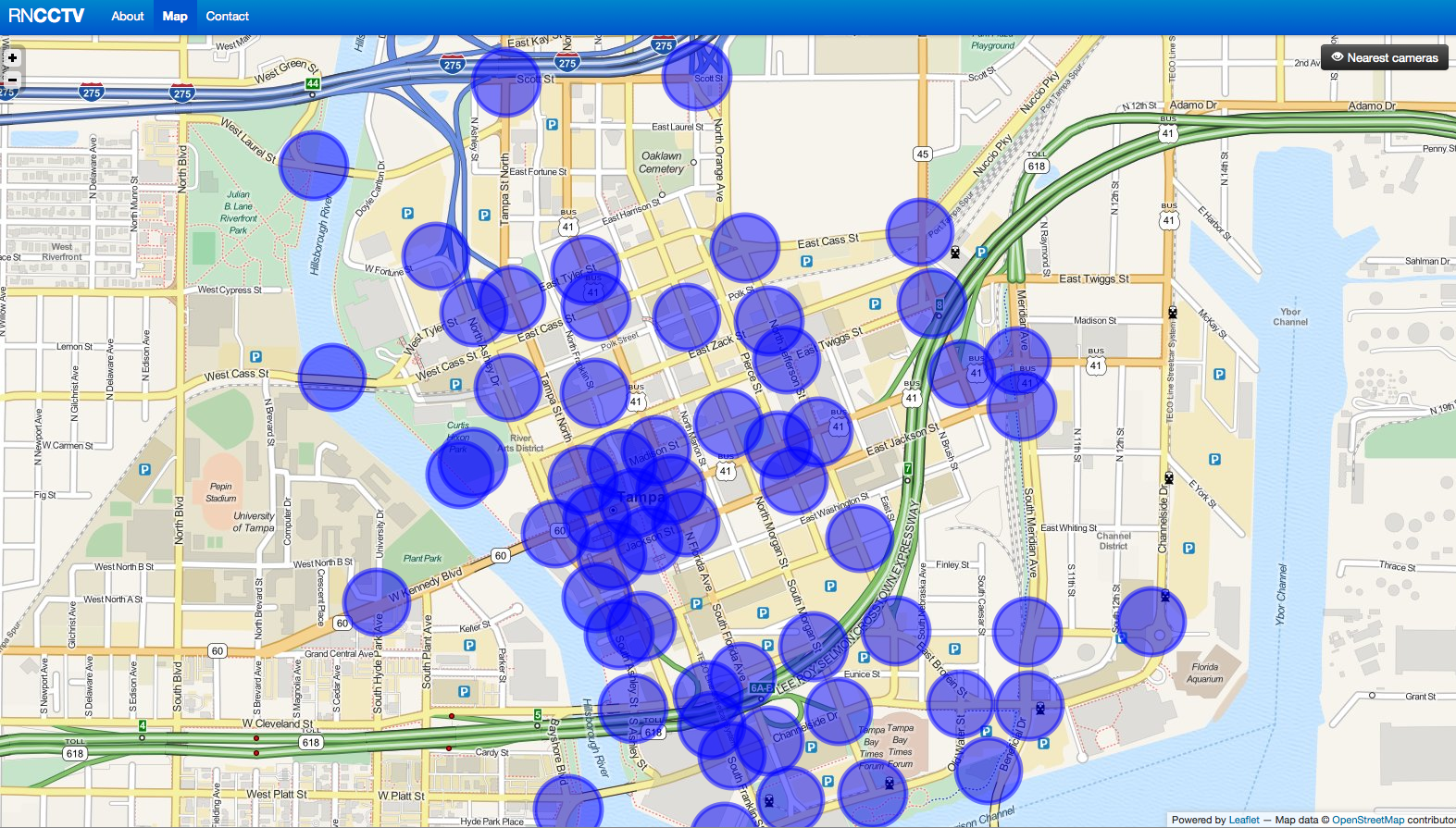
Is there ever enough surveillance?

The Tribune came out in favor of more surveillance in a recent editorial.
The surveillance cameras left behind after the Republican National Convention last year are proving to be effective at solving crimes and tamping down criminal activity.

Tampa police told the City Council this week that the cameras were directly responsible for the arrest of an assault suspect, and that they have been helpful in solving burglaries. Their visibility downtown may also be responsible for deterring criminal behavior like shoplifting.

Clearly, the benefits of having the cameras outweigh the privacy concerns raised by the American Civil Liberties Union and others when the cameras remained after the RNC left town.
The Trib goes on how the cameras have helped solve several crimes, the images are recorded and erased every thirty days (except when?), etc. Please read the whole thing if you have not.

No doubt the surveillance state cameras keep things in control.  I'm sure the law enforcement authorities have adequate controls and procedures.  I'm sure no law enforcement officer would ever violate their oaths. Right?

http://media2.abcactionnews.com//photo/2012/08/23/Tampa_surveillance_camera_20120823012304_320_240.JPG
Surveillance camera
Don't get me wrong.  I know several local law enforcement officers as friends and acquaintances, and have worked with some in a professional capacity.  I'll be among the first to defend them when they have to make that split second life or death decision.  I can't imagine what that must be like.  Fortunate for me.  I'm glad they are there for us.

http://www.indybay.org/uploads/2012/08/19/tampa_surveillance_cameras_rnc2012.png
Tampa 2012 RNC Surveillance Cameras
But they are like us, only human, and can make mistakes.  Surveillance cameras are another tool they can use for a great public service, and another tool with which they may make mistakes. Just as they might make mistakes with a firearm.  And just like police abuse with a firearm is punishable, abuse by authorities of surveillance cameras is punishable. Good.

In the current surveillance state, in addition to surveillance cameras, we have:
Lots of people are watching you.  If not directly with surveillance cameras, they can monitor you with Big Data and analytics.  They can know where you are, where you've been, where you're going, who you know, who you know knows who, what you buy, ...

And that's just some of the government surveillance.  

Businesses are tracking you as well on the web and in their businesses trying to figure out ways to get you to buy, and get you to buy more.  Again, Big Data is part of the equation.  

Is there a limit?  

The Trib states:
But privacy concerns now pale in comparison to security concerns. People in public places have no expectation of privacy in this increasingly dangerous post-9/11 world. Businesses routinely use cameras, and individuals frequently use their smartphones to record public events.

The Boston Marathon bombing earlier this year pretty much ended the privacy debate over the placement of security cameras at large public gatherings.
The RNC established Tampa as a city capable of hosting a large national event with significant security concerns. It proved to be a public relations boon and a financial windfall for the city.

Although unintended, its most enduring legacy may be a safer downtown.
Perhaps.  The Trib is mixing private choices in how we interact with businesses and our use of smart phones, and public safety.  Private choices are activities we can opt out of if we're concerned about a business that may overreach and compromise our privacy for their benefit.  We do make compromises around conveniences and benefits ... and safety ... over privacy all the time.  We can do so with many business activities.  Maybe not enough, but many companies are giving us control and choice over our data.

Government data collection is harder to control.  Let us know how well you make out the next time you chose to not fully share your financial information with the IRS.

We are also seeing with the NSA spying scandal the federal government has required Verizon, AT&T, Google, Facebook, and others to provide all sorts of data on their behalf. Privacy and the use of our data are likely to get murkier before it clears up.

The privacy debate is much larger than just security cameras at large public gatherings.  The recent news around the NSA spying and web data collection and security breeches has only made privacy our our data more of a concern.

But who watches the watcher?

If this additional surveillance is such a good idea, then perhaps we can turn some of this surveillance state on the state.  What if  law enforcement was being watched as well?  

A watched cop is a better cop.   That's the point that Ron Bailey of Reason makes. That's good as far as it goes, but the surveillance state today is more than a cop on the beat wearing a video camera.

http://media.nj.com/ledgerupdates_impact/photo/east-orange-surveillance-camerasjpg-778dae04c6c995de_large.jpg
Video Surveillance monitoring center
It includes camera surveillance all over the municipality, monitored and collected by computers, maintained and analyzed by more computers, and data and video analytics specialists... and some 3rd party contractors, consultants, and data and analytics providers.

In today's surveillance state, we need to watch all the watchers.  That includes those behind the locked doors crunching through the data.  More video for them? More other monitoring and auditing and compliance such as a Dodd-Frank for our watchers?  I'm not sure I have an exact answer.

But if surveillance cameras are good to keep us in control, perhaps we need something similar to ensure our watchers are in control.

Subsidizing federal workers subsidized transportation?

Floridians love their cars and are not about to give them up to board buses or light rail.

So goes the argument by those who oppose more public spending on mass transit. Transportation funding, the transit critics say, should go toward widening snarled roads or building new ones.
No, not that.  But if we did fix the roads, transit actually would operate more effectively.   So would the drivers, who pay the taxes that pay for the roads and who subsidize transit (typically around  80% of the transit costs).  But that's not today's point.

Let's look here:
But hundreds of Floridians who work at the James A. Haley Veterans' Hospital forego driving personal vehicles for van pools or buses and they're loving it. Not only are they saving money on gas and vehicle wear and tear, but they're enjoying a small sense of community with workers they might never have met.

...

Haley workers are among the 37,155 Department of Veterans Affairs employees nationwide who take advantage of a transit benefit for federal employees. The program subsidizes the costs for van pools and public bus transportation and provides a $20-a-month stipend for bicycle commuting.

At Haley, 240 employees use 27 van pools. They receive vouchers for $185 a month to cover the cost of the van, provided by a private company, and the gas.

Another 180 Haley workers ride HART public buses, which come and go from the University Area Transit Center across the street from the hospital. The federal transit benefit pays for monthly bus passes.
$185 benefit a month to commute to and from work?  $20 if you ride a bike to work? Commuting, not business trips. Commuting, like most of us who work get to do everyday. On our own dime.
In 2012, Congress raised the allowable monthly transit benefit from $125 to $245 a month per federal employee. More than 13,000 VA employees nationwide had reported that the $125-a-month subsidy did not cover their transit costs, according to a March 4 memo from a VA official.

With the increased subsidy, the nationwide cost for the VA's share of the transit benefit is just over $50 million.
http://www.gohart.org/departments/marketing/press/media_library/local_express_bus/bus_with_lift.JPG
HART Bus
So let me get this straight.  The U.S. taxpayer is subsidizing another $50M so federal employees, paid by the U.S. taxpayer, can take transit, which is already subsidized by the U.S. taxpayer.

Granted, in the grand scheme of things with the federal budget and trillion dollar deficits, $50M is barely a drop in the bucket, barely enough for a 1/2 mile of light rail.  But when does this give away end?

What exactly makes VA or other federal workers entitled to such a subsidy?  Why, not say, an office clerk for a downtown law firm? Why not a hair stylist?  Why not a a traveling sales professional? Why not an intrepid news reporter covering news across the county? Why not a college student waiting tables part time working their way through college (Well, HART does offer some programs locally for students).
Some Haley workers don't have cars and would have a hard time getting to work without transit. Laura Palmer, a medical records technician, is legally blind. She boards a HART bus at 6:40 a.m. at her town home community on west Fletcher Avenue and arrives at the hospital at 7:30.

Because of her disability, Palmer can't risk crossing busy Fletcher Avenue to the hospital on the initial approach, so she waits until the bus loops around and drops her closer to the building. That adds 10 to 15 minutes to her commute.

Palmer was one of the voters on the losing side of a 2010 referendum to increase the county sales tax for road improvements, more buses and a light rail system. Though she is appreciative of the federal transit benefit, Palmer said she would like to see more travel options.
Legally blind, we get it.  We should... and do, offer enhanced transit for those disabled among us. HARTPlus Paratransit, for example, might be another service Laura Palmer can leverage for her transportation needs. That's a good thing.

http://www.planhillsborough.org/wp-content/uploads/2013/06/HART_MV1_transitvehicle.jpg
HARTPlus Paratransit
But the able-bodied among us, and our able-bodied federal workers, should not be entitled to subsidies, any more than you or I.
“The bus system caters to everyone; there is no discrimination,” [Rodney Roberson] said. “It becomes like a family affair. You get to know people. And you get to know who to avoid.”
I would avoid telling them you're riding on their dime $2.00.

UPDATE:
We got into a twitter discussion with Kevin Thurman, Executive Director of Connect Tampa Bay, and he stated this federal program was brought up to equalize the existing tax benefits offered the private sector. See here and here.  Thanks Kevin, for adding information that was missing in the original story.

From the Wikepedia article:
Prior to 1984, the IRS treated free employee parking, provided by an employer, as a tax-free fringe benefit regardless of the value of the parking.[6] There was no tax-free benefit for transit commuting. This parking subsidy served as an incentive, in some cases a significant incentive, to drive to work even in areas where there was a good transit alternative. Many believed that such subsidies contributed to the growing congestion on the highways. In one study conducted in the New York City metro area, as many as 64% of the solo drivers commuting into Manhattan, an area well served by transit, were receiving a parking subsidy.
So, in other words, the "free employee parking" is a fringe benefit, so they wanted transit commuters to receive similar benefits and encourage more transit, which is already heavily subsidized.  You can read the links above to further understand the program.

I'm sure we'll be reading soon how well the program works for some private sector employers in Tampa Bay.

Fine.  So the program confers benefits to certain commuters for federal and private sector workers.  Is that twice as good or twice as bad?

Here's the rub.  The benefit is only offered through "employers".  If you're self employed, good luck with getting the subsidy.  If you work for small business, it's extremely unlikely you're business has a critical mass of centrally approved commuters to take advantage of such a program, much less the time and expense it takes to stay in compliance with such a program.  If you otherwise pay taxes, and don't get this benefit, you're subsidizing big business and federal workers.

Still in doubt?  Next time you go for a haircut, ask your barber if he get's a commuting benefit.

Reminds me, I need a haircut.