Sunday, September 8, 2013

Voucher lawsuit ironies


We have a guest post from Tampa resident Tim Curtis that was also in the Tampa Tribune today as a letter to the editor.  So for those who don't get or read the Tribune:
A news story that hasn’t received a lot of attention from the media is Attorney General Eric Holder’s recent lawsuit against the Louisiana’s school voucher program. Even though 90 percent of the children who use them are minorities and all were originally in failing schools, the Department of Justice is suing because the program is interfering with the government’s school integration plan for the state. In effect, to achieve some arbitrary racial balance, Holder is trying to deny these kids the quality education their parents want them to have.
There are two big ironies here. One is that the anti-segregation laws which are the basis for his action were created to give minorities a better education are now being used to prevent that. And two, President Obama, Holder’s boss, talks a lot about helping more Americans afford college. Yet if his attorney general succeeds, many children in Louisiana will not be ready to attend college no matter how much financial aid is available.
Tim Curtis
Tampa

Attorney General Eric Holder
--------

Thanks Tim for the post. And the Eye adds:  Education is a local issue and Florida has one of the largest and growing school voucher programs in the country

The Wall Street Journal weighed in with an Op-ed yesterday: (behind the subscription firewall)
Asked in a radio interview this week about the Justice Department's recent lawsuit to block Louisiana's school voucher program, Education Secretary Arne Duncan pleaded ignorance. "I'm not familiar with that lawsuit," said the man whose department scrutinizes state education reforms in great detail as part of the Race to the Top competition. "That's between the Department of Justice and the state of Louisiana."  
The Advocate daily newspaper in Baton Rouge reports that former Justice Department Civil Rights chief Thomas Perez, who is now Labor Secretary, was nosing around the state earlier this year. On Thursday we reported that Mr. Perez had threatened California with a loss of federal cash if it didn't exempt Teamster and Amalgamated Transit Union transit workers from pension reforms. If Mr. Perez is now also running education policy, it really is time for Mr. Duncan to leave.
The ironies of the Obama Administration and his Cabinet just continue on and on......so who's next on their hit list? 

Thursday, September 5, 2013

Time to exterminate the PTC


There's lots of noise these days, including from here at the Eye, other local media and some elected officials, regarding our infamous Hillsborough County Public Transportation Commission aka the PTC. And last week brought some more turbulence to the PTC with the resignation of its Executive Director, Cesar Padilla. Padilla made $107,000 and decided to moonlight at the same time to bring in more bacon, but somehow left out the moonlighting bacon from his finanical disclosure. In fact, Padilla resigned just as he was trying to negotiate a new contract at a higher rate with PTC Chairman County Commissioner Victor Crist. 
Padilla, who is paid just more than $107,000 by the PTC, was negotiating a new contract with that board's chairman, County Commissioner Victor Crist. Padilla was seeking a pay hike because a proposed contract provision would have forced him to forgo outside work, Crist said. During those discussions, Padilla told Crist he had been doing security work.
Crist was surprised to find out in January that Padilla wrote his own exemplary and excellent performance evaluation. Then Crist finds out about Padilla's moonlighting and his financial disclosure snafu and Crist is talking about a raise for Padilla. That is absurd. In the private sector, there's a good chance Padilla would be fired.

Former County Commissioner Kevin White, who was previously Chairman of the PTC, went to prison on federal corruption charges for taking bribes from a towing company who wanted a piece of the PTC regulated actions. And guess how Padilla became Executive Director, a position he was not even qualified for at the time? The Tribune reported this:
It was White who pushed to elevate Padilla, then PTC chief inspector, to director of the agency. White won board approval to make Padilla interim director and to raise his salary from $40,000 to $106,360. Padilla later was given the job full time, though he was still working on his college diploma, a requirement for the directorship.
As the saying goes, where there's smoke, there's fire.

In addition to Padilla resigning last week, a lawsuit was filed with regards to the $50 minimum charge that limousine services must charge due to PTC rules and regulations. A press conference was held last Thursday announcing this lawsuit and the Eye was there.

Justin Pearson, who is the Executive Director of the FL chapter of the Institute for Justice (IJ) began the press conference explaining that IJ is a national public interest law firm that litigates in 4 key areas: property rights, school choice, free speech and economic liberty. IJ filed this lawsuit against the PTC and Victor Crist, in his official capacity as Chairman of the PTC, on behalf of Thomas Halsnik who owns a local limousine service, Black Pearl Limousines and limousine customers Kenrick Geckler and Daniel Faubion.

Pearson stated
The $50 minimum charge, no matter how short the ride, violates the FL Constitution because it makes it illegal for businesses to offer a better deal to their customers. The minimum charge violates the spirit of competition that hurts business owners, their employees and consumers.
After the press conference, the Eye spoke with Pearson and a couple of the Plaintiffs. 


The Institute for Justice lawsuit is solely focused on the $50 minimum charge. The limo driver wants to be abe to price shorter rides and offer deals just like other businesses do everyday. The consumer, of course, wants to be able to negotiate those deals.  IJ continues to and has successfully litigated similar economic liberty lawsuits throughout the country. Getting rid of this minimum charge sounds like a win win for business and consumers so we will be watching as this lawsuit proceeds.  A bit noisy that day, but here's the entire IJ press conference.


But there are numerous issues with the PTC in its current state. The PTC was created 30 years ago and once government bureaucracies and regulations are in place, it is difficult to get rid of them no matter how archaic or burdensome they become.  Transportation is a hot issue today and we should embrace private sector innovative transportation solutions not prohibit or inhibit them.  No elected officials should be on a regulatory commission. That is an invitation for unethical and corrupt activities which this commission has experienced enough of. We all want common sense safety regulations and background checks. We do not need the heavy hand of the PTC picking winners and losers, stifling competition and innovation, and politicizing all of these shared vehicle services - taxi cabs, limos, towing and ambulance services.

Today there is growing public outcry over the PTC and now a lawsuit. The PTC cannot be salvaged as it stands today.  It's time to exterminate it. 


Tuesday, September 3, 2013

Is there ever enough surveillance?

The Tribune came out in favor of more surveillance in a recent editorial.
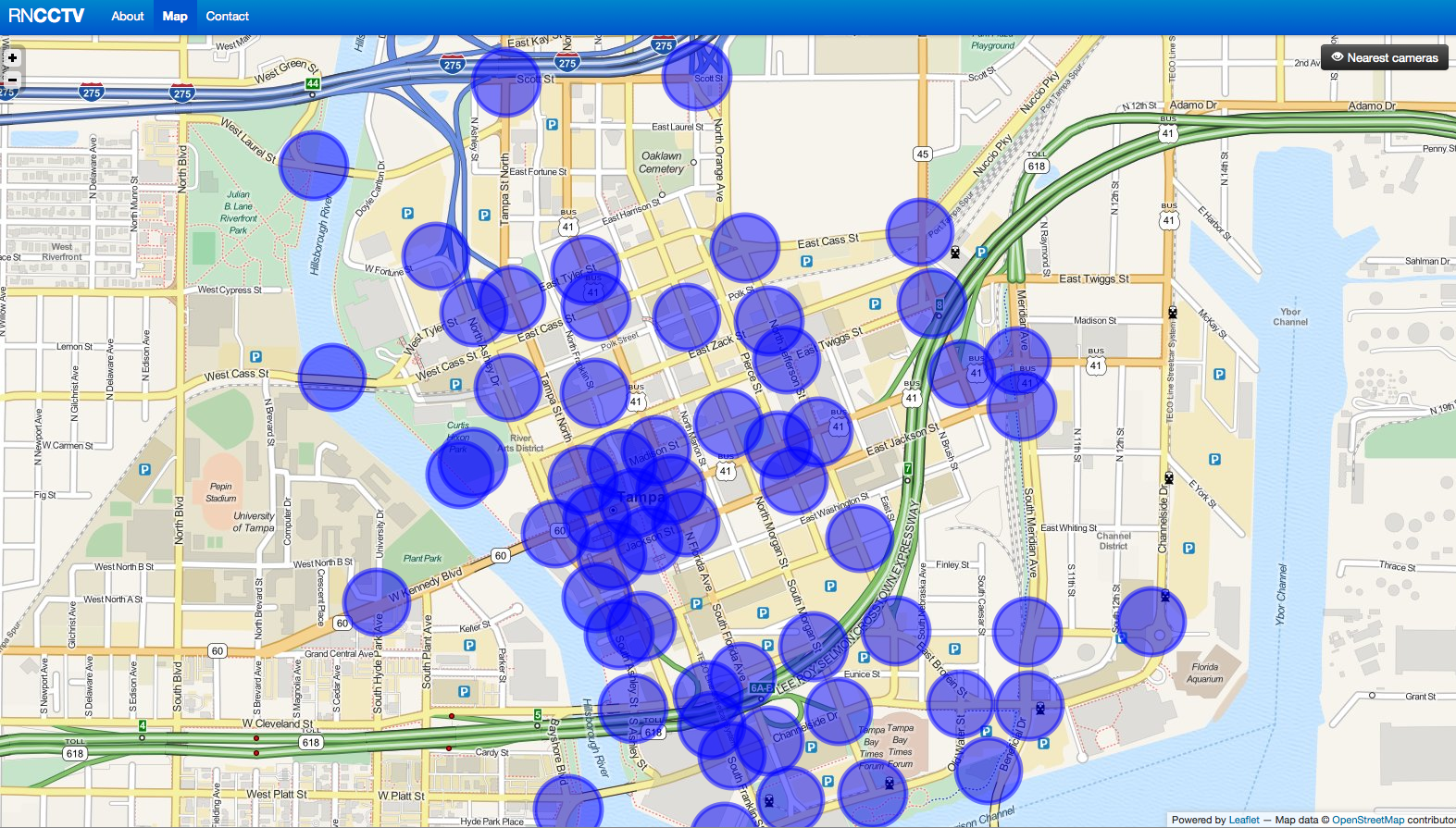
The surveillance cameras left behind after the Republican National Convention last year are proving to be effective at solving crimes and tamping down criminal activity.

Tampa police told the City Council this week that the cameras were directly responsible for the arrest of an assault suspect, and that they have been helpful in solving burglaries. Their visibility downtown may also be responsible for deterring criminal behavior like shoplifting.

Clearly, the benefits of having the cameras outweigh the privacy concerns raised by the American Civil Liberties Union and others when the cameras remained after the RNC left town.
The Trib goes on how the cameras have helped solve several crimes, the images are recorded and erased every thirty days (except when?), etc. Please read the whole thing if you have not.

No doubt the surveillance state cameras keep things in control.  I'm sure the law enforcement authorities have adequate controls and procedures.  I'm sure no law enforcement officer would ever violate their oaths. Right?

http://media2.abcactionnews.com//photo/2012/08/23/Tampa_surveillance_camera_20120823012304_320_240.JPG
Surveillance camera
Don't get me wrong.  I know several local law enforcement officers as friends and acquaintances, and have worked with some in a professional capacity.  I'll be among the first to defend them when they have to make that split second life or death decision.  I can't imagine what that must be like.  Fortunate for me.  I'm glad they are there for us.

http://www.indybay.org/uploads/2012/08/19/tampa_surveillance_cameras_rnc2012.png
Tampa 2012 RNC Surveillance Cameras
But they are like us, only human, and can make mistakes.  Surveillance cameras are another tool they can use for a great public service, and another tool with which they may make mistakes. Just as they might make mistakes with a firearm.  And just like police abuse with a firearm is punishable, abuse by authorities of surveillance cameras is punishable. Good.

In the current surveillance state, in addition to surveillance cameras, we have:
Lots of people are watching you.  If not directly with surveillance cameras, they can monitor you with Big Data and analytics.  They can know where you are, where you've been, where you're going, who you know, who you know knows who, what you buy, ...

And that's just some of the government surveillance.  

Businesses are tracking you as well on the web and in their businesses trying to figure out ways to get you to buy, and get you to buy more.  Again, Big Data is part of the equation.  

Is there a limit?  

The Trib states:
But privacy concerns now pale in comparison to security concerns. People in public places have no expectation of privacy in this increasingly dangerous post-9/11 world. Businesses routinely use cameras, and individuals frequently use their smartphones to record public events.

The Boston Marathon bombing earlier this year pretty much ended the privacy debate over the placement of security cameras at large public gatherings.
The RNC established Tampa as a city capable of hosting a large national event with significant security concerns. It proved to be a public relations boon and a financial windfall for the city.

Although unintended, its most enduring legacy may be a safer downtown.
Perhaps.  The Trib is mixing private choices in how we interact with businesses and our use of smart phones, and public safety.  Private choices are activities we can opt out of if we're concerned about a business that may overreach and compromise our privacy for their benefit.  We do make compromises around conveniences and benefits ... and safety ... over privacy all the time.  We can do so with many business activities.  Maybe not enough, but many companies are giving us control and choice over our data.

Government data collection is harder to control.  Let us know how well you make out the next time you chose to not fully share your financial information with the IRS.

We are also seeing with the NSA spying scandal the federal government has required Verizon, AT&T, Google, Facebook, and others to provide all sorts of data on their behalf. Privacy and the use of our data are likely to get murkier before it clears up.

The privacy debate is much larger than just security cameras at large public gatherings.  The recent news around the NSA spying and web data collection and security breeches has only made privacy our our data more of a concern.

But who watches the watcher?

If this additional surveillance is such a good idea, then perhaps we can turn some of this surveillance state on the state.  What if  law enforcement was being watched as well?  

A watched cop is a better cop.   That's the point that Ron Bailey of Reason makes. That's good as far as it goes, but the surveillance state today is more than a cop on the beat wearing a video camera.

http://media.nj.com/ledgerupdates_impact/photo/east-orange-surveillance-camerasjpg-778dae04c6c995de_large.jpg
Video Surveillance monitoring center
It includes camera surveillance all over the municipality, monitored and collected by computers, maintained and analyzed by more computers, and data and video analytics specialists... and some 3rd party contractors, consultants, and data and analytics providers.

In today's surveillance state, we need to watch all the watchers.  That includes those behind the locked doors crunching through the data.  More video for them? More other monitoring and auditing and compliance such as a Dodd-Frank for our watchers?  I'm not sure I have an exact answer.

But if surveillance cameras are good to keep us in control, perhaps we need something similar to ensure our watchers are in control.

Subsidizing federal workers subsidized transportation?

Floridians love their cars and are not about to give them up to board buses or light rail.

So goes the argument by those who oppose more public spending on mass transit. Transportation funding, the transit critics say, should go toward widening snarled roads or building new ones.
No, not that.  But if we did fix the roads, transit actually would operate more effectively.   So would the drivers, who pay the taxes that pay for the roads and who subsidize transit (typically around  80% of the transit costs).  But that's not today's point.

Let's look here:
But hundreds of Floridians who work at the James A. Haley Veterans' Hospital forego driving personal vehicles for van pools or buses and they're loving it. Not only are they saving money on gas and vehicle wear and tear, but they're enjoying a small sense of community with workers they might never have met.

...

Haley workers are among the 37,155 Department of Veterans Affairs employees nationwide who take advantage of a transit benefit for federal employees. The program subsidizes the costs for van pools and public bus transportation and provides a $20-a-month stipend for bicycle commuting.

At Haley, 240 employees use 27 van pools. They receive vouchers for $185 a month to cover the cost of the van, provided by a private company, and the gas.

Another 180 Haley workers ride HART public buses, which come and go from the University Area Transit Center across the street from the hospital. The federal transit benefit pays for monthly bus passes.
$185 benefit a month to commute to and from work?  $20 if you ride a bike to work? Commuting, not business trips. Commuting, like most of us who work get to do everyday. On our own dime.
In 2012, Congress raised the allowable monthly transit benefit from $125 to $245 a month per federal employee. More than 13,000 VA employees nationwide had reported that the $125-a-month subsidy did not cover their transit costs, according to a March 4 memo from a VA official.

With the increased subsidy, the nationwide cost for the VA's share of the transit benefit is just over $50 million.
http://www.gohart.org/departments/marketing/press/media_library/local_express_bus/bus_with_lift.JPG
HART Bus
So let me get this straight.  The U.S. taxpayer is subsidizing another $50M so federal employees, paid by the U.S. taxpayer, can take transit, which is already subsidized by the U.S. taxpayer.

Granted, in the grand scheme of things with the federal budget and trillion dollar deficits, $50M is barely a drop in the bucket, barely enough for a 1/2 mile of light rail.  But when does this give away end?

What exactly makes VA or other federal workers entitled to such a subsidy?  Why, not say, an office clerk for a downtown law firm? Why not a hair stylist?  Why not a a traveling sales professional? Why not an intrepid news reporter covering news across the county? Why not a college student waiting tables part time working their way through college (Well, HART does offer some programs locally for students).
Some Haley workers don't have cars and would have a hard time getting to work without transit. Laura Palmer, a medical records technician, is legally blind. She boards a HART bus at 6:40 a.m. at her town home community on west Fletcher Avenue and arrives at the hospital at 7:30.

Because of her disability, Palmer can't risk crossing busy Fletcher Avenue to the hospital on the initial approach, so she waits until the bus loops around and drops her closer to the building. That adds 10 to 15 minutes to her commute.

Palmer was one of the voters on the losing side of a 2010 referendum to increase the county sales tax for road improvements, more buses and a light rail system. Though she is appreciative of the federal transit benefit, Palmer said she would like to see more travel options.
Legally blind, we get it.  We should... and do, offer enhanced transit for those disabled among us. HARTPlus Paratransit, for example, might be another service Laura Palmer can leverage for her transportation needs. That's a good thing.

http://www.planhillsborough.org/wp-content/uploads/2013/06/HART_MV1_transitvehicle.jpg
HARTPlus Paratransit
But the able-bodied among us, and our able-bodied federal workers, should not be entitled to subsidies, any more than you or I.
“The bus system caters to everyone; there is no discrimination,” [Rodney Roberson] said. “It becomes like a family affair. You get to know people. And you get to know who to avoid.”
I would avoid telling them you're riding on their dime $2.00.

UPDATE:
We got into a twitter discussion with Kevin Thurman, Executive Director of Connect Tampa Bay, and he stated this federal program was brought up to equalize the existing tax benefits offered the private sector. See here and here.  Thanks Kevin, for adding information that was missing in the original story.

From the Wikepedia article:
Prior to 1984, the IRS treated free employee parking, provided by an employer, as a tax-free fringe benefit regardless of the value of the parking.[6] There was no tax-free benefit for transit commuting. This parking subsidy served as an incentive, in some cases a significant incentive, to drive to work even in areas where there was a good transit alternative. Many believed that such subsidies contributed to the growing congestion on the highways. In one study conducted in the New York City metro area, as many as 64% of the solo drivers commuting into Manhattan, an area well served by transit, were receiving a parking subsidy.
So, in other words, the "free employee parking" is a fringe benefit, so they wanted transit commuters to receive similar benefits and encourage more transit, which is already heavily subsidized.  You can read the links above to further understand the program.

I'm sure we'll be reading soon how well the program works for some private sector employers in Tampa Bay.

Fine.  So the program confers benefits to certain commuters for federal and private sector workers.  Is that twice as good or twice as bad?

Here's the rub.  The benefit is only offered through "employers".  If you're self employed, good luck with getting the subsidy.  If you work for small business, it's extremely unlikely you're business has a critical mass of centrally approved commuters to take advantage of such a program, much less the time and expense it takes to stay in compliance with such a program.  If you otherwise pay taxes, and don't get this benefit, you're subsidizing big business and federal workers.

Still in doubt?  Next time you go for a haircut, ask your barber if he get's a commuting benefit.

Reminds me, I need a haircut.

Tuesday, August 27, 2013

It's Decision Time on ObamaCare - DeMint and Heritage Comes to Tampa

Former Senator Jim DeMint is a soft spoken Southern gentleman but when he speaks you listen intently....I first met the Senator right before the 9/12/2009 Taxpayer March on DC – you know that march where over a million Americans attended but the mainstream refused to report about. A group of us from Florida were walking the halls of Congress the day before the march and lo and behold Senator DeMint was in his office. He invited us all in to chat and get a picture with him.  Senator DeMint then proceeded to tell us how Proud he was to stand with us. We, of course, were grateful and thanked him for his unrelenting work and efforts to stop ObamaCare back then.

So we looked forward to the Heritage Action event last week where Senator DeMint, now Chairman of Heritage Foundation, spoke to a packed house of over 700. The Eye was there and the room was energized with all who spoke. 


We were fortunate to attend the Press Conference prior to the event with Senator DeMint, Michael Needham, CEO of Heritage Action and Chris Jacobs, Heritage healthcare policy analyst.  


We found it curious those in the media who are “so interested” in Senator Rubio's position supporting defunding ObamaCare.  But the same media is "never interested" in asking Senator Nelson, who voted for ObamaCare in 2010, what he thinks about it now.  Why does the Senator who voted for the train wreck get a pass?  We won't hold our breath wondering. A couple key points we will emphasize came at the end of the Press Conference as DeMint basically said 
A government shutdown is a misnomer - it is a slowdown, essential services continue to get funded but the damage from a slowdown is so much less than the damage from implementing this bill. 
And remember Don't Blink!

We were able to get a couple of interviews before the event.  And while I am still getting the hang of this interview stuff, Tim Curtis, Chairman of the Tampa912, gave us his insights.

So ObamaCare is not ready for primetime, waivers and exemptions have been given to certain groups, including Congress and not to others, like you and me.  It appears to be an IT nightmare that includes issues with securing the personal data being entered, the inability to verify eligibility and so many missed deadlines.  With Tampa practically an epicenter for identity fraud, we have to wonder how comfortable you would feel entering your tax and personal information into the ObamaCare system?  As Tim tells us, there are free market solutions that will fix this mess but we first must get rid of ObamaCare.  

We then caught up with the Florida Regional Coordinator for Heritage Action, Karen Jaroch, who helped plan this event. She explains the purpose of the event and has a great message  for how ObamaCare can be defunded while the rest of the government continues to be funded.


The purpose of this Heritage Action event? As Karen said, we are in the August recess when our Congressional Representatives and Senators should be home holding Townhall meetings to hear from their constituents.  Unfortunately too many of them no longer hold any Townhalls so this event offered an alternative opportunity to be heard.  

The main event included comments from Senator DeMint and Heritage Action CEO Michael Needham and a Q & A with both of them answering questions selected from the audience. A true joy at the end was Rafael Cruz, Senator Ted Cruz's father, who escaped Cuba and came to America. Rafael personally knows what it is to have his freedoms and liberties immediately taken away.  But he says in the United States those liberties and freedoms are slowly being eroded away like a frog in a pot on the stove, with the heat slowly increasing until unwittingly boiled dead.


As Senator DeMint said
It's decision time.  Since when did Americans not fight for what they believe in because they were afraid they would lose?
And Michael Needman added this when questioned about the Obama and the Democrats successful social media strategies.
We don't just have a tech problem.  We need to have a soul, we need to lead, we need to inspire. Take responsibility within your sphere of influence - on social media, going door to door, talking to friends and talking over the dinner table.
From the soft spoken Southern gentleman DeMint to the energetic fervor of Rafael Cruz, there was a buzz and sense of urgency ignited in the room. We were reminded that We the People do have the power but that we must exercise it. The clock is ticking on ObamaCare and we were told the urgency is now for empowered Americans to lead and take the following action.  
Contact your Congressional Representative and request they sign Rep. Meadows letter to Defund ObamaCare. 
Sign the Don't Fund It Petition and let's get at least a million signatures.
We hope you enjoy our videos of this event, will stop back and watch them again from time to time and that you will share them with others "within your sphere of influence".  

Sunday, August 25, 2013

The homogeneous diversity panel

The Tribune came out for non-diversity on the diversity panel in an editorial recommending the rejection of Terry Kemple for the new volunteer diversity advisory council.
After vigorously opposing the possibility of Terry Kemple being appointed to a new diversity advisory council several months ago, Hillsborough County Commissioner Kevin Beckner has now softened his stance.

Kemple, the well-known Christian conservative activist, should be allowed to have his application to join the council considered by the commission, Beckner says.
Good enough... now... for Kevin Beckner, who's trying to rescue his beloved diversity panel after several miscues. Apparently Terry Kemple thinks thoughts the Tribune thinks shouldn't be thought.  Such as traditional values, as if they matter any more.

Terry Kemple
The diversity panel has been a long running saga for the Hillsborough County Commission, as the love child of Commissioners Beckner and Les Miller.  They've repeatedly tried to block Kemple's appointment through ill advised political maneuvers that only agenda driven politicians would appreciate.  We've documented these in several posts, here, here, and here.  We've interviewed Terry Kemple in the past.
The council, [Kemple] wrote, is probably “code for some effort to forward the homosexual agenda.” He went on to say the council’s work was not the “important work” commissioners should be doing.

Shortly afterward, a national diversity council helping the county review the applications decided to pull Kemple from consideration. But a heated discussion among commissioners left the application in the air and effectively delayed the council’s formation. Beckner now says he’s willing to have Kemple’s membership considered so the council can be formed, with or without him. Kemple’s membership seems likely if the four commissioners who backed his application during an earlier meeting vote in his favor.
Good thing we got some out of town help on how to have a not too diverse diversity panel. I'd hate to think where we would be without all their great help.  Who selected them and made them arbiter of properly diverse thought in Hillsborough County?

There are 58 (!) committees and boards for Hillsborough County.  I'm sure they are all very, very important to someone out there. One might say we already have a diversity of panels.  Some include:

  • Anti-Bullying Advisory Committee
  • 4 related to Child Care and Children's services
  • Commission on the Status of Women
  • Community Action Board (in the name of diversity, I demand an inaction board!)
  • Council on Aging
  • 3 Historical related councils
  • Human Relations Board (whose mission seems to substantially overlap with the Diversity Advisory Council)
  • Only 2 Arts related councils

Some are "boards", some are "councils", some are "committees"...  don't ask me why.

Exactly what is the mission of the diversity advisory council?
This Council works to facilitate communication between County government and its diverse populations, and address matters related to diversity that are important to everyone.
The membership of this Council shall be appointed by the Board of County Commissioners and will be comprised of 24 members, two representatives from each of the following categories:
  • African American
  • Caribbean
  • Far East Asian
  • Gay, Lesbian, Bisexual and Transgender
  • Hispanic/Latino
  • Indian Asian
  • Middle Eastern
  • Native American
  • Northern European
  • Southern European
  • People with Disabilities
  • At-Large (identification with a specific category not required)
Pretty clear, right? After all, it is "important to everyone".
What about that Human Relations Board?  What is it's mission?
This Board encourages equality among all people by reviewing complaints filed under Hillsborough County's Human Rights Ordinance which promotes fair treatment and equal opportunity for people regardless of race, religion, color, sex, national origin, age, disability, or marital status.
MEMBERSHIP:
The membership of this board shall be appointed by the BOCC and shall be comprised of 13 members. This Board seeks to be diverse in its membership and representation by persons of all ages, races, religious beliefs, ethnic backgrounds, conditions of employment, and both genders is encouraged. In addition, there shall be on the Board at all times, a person with a disability or a person representing persons with disabilities.
Consideration for membership shall be given to representatives from the following fields:
  • Retail Merchandising Management
  • Industrial Management
  • Real Estate Sales
  • Property Leasing
  • mortgage Financing
  • Law Enforcement
  • Labor Council
I'll leave it as an exercise to the reader to rationalize why we need yet another committee, board, or council.

Just to make sure everyone knows, according to the Hillsborough County Charter, discrimination is prohibited:
Section 9.11 Discrimination Prohibited.
To be consistent with federal and state constitutions, laws, rules, and regulations, the county  government shall not deprive any person of any right because of race, sex, age, national origin, religion, disability, or political affiliation. The administrative code shall provide adequate means for protecting these rights, including equal opportunity assurances.
Demographically, Hillsborough County is 70%+ "white".

Hillsborough County Population by race

I'm sure the Diversity Advisory Council will be 70% white, right?

This is an unpaid, non-policy volunteer position.  Why are the Tribune and politicians so afraid of Terry Kemple?  Why are they limiting a diversity of opinion?  Is this truly a diversity council, or is there some other agenda the Tribune and the politicians are trying to promote?  Are they discriminating against Terry Kemple due to his traditional religious beliefs?  Will they have the same objections for a future religious Muslim nominee?  

We cannot have diversity of thought on the diversity panel!

Nothing closes the mind as tight as groupthink.

Wednesday, August 21, 2013

Roads First, Buses Second


First we were told we are in a transportation armagedden. Now there appears to be this frantic attitude of we've got “to do something” to expand mass transit simply for the sake of doing something. The Tribune reported Monday that Commissioner Sharpe is shifting his focus “to do something” to buses.

The Eye agrees that's better than focusing on costly light rail boondoggles. But this hysteria about mass transit may be misguided and the confusion – buses, rail, transit - oh my - continues as the Tribune reports
Sharpe said he still favors a “demonstration” rail line, perhaps from Tampa International Airport to the Westshore business district. Once ridership on the demonstration line takes off, he said, the public will support expanding the rail lines as they have in cities like Denver.
It's no longer Charlotte, now we need to emulate Denver? But Denver is part of an eight county regional transportation taxing district (RTD). This eight county RTD includes Denver and Boulder, has a population of nearly 3 million and covers a sevice area of over 2300 square miles. The Denver RTD includes 6 light rail lines with an average daily ridership of 69,300, which is about 2% of the RTD population. Even with a regional tax, RTD is having fiscal issues and had to identify what it could do to raise revenues, cut costs to cover it's huge shortfalls. Do we really want to follow Denver?

The Tribune yesterday reported on the HART board finance committee held Monday. I was there and stayed for their entire Transportation Development Plan (TDP) presentation. I listened interestingly to HART's two 10 year plan options, one that basically maintains their status quo and a “visionary” one of building out six more MetroRapid BRT's and greatly expanding services in the county. While the status quo plan can operate for the next 10 years, there is a capital deficit that hits in the next few years for vehicle replacement. If vehicles must run longer, then additional maintenance costs are incurred. Therefore, there will be a capital deficiency even with the status quo plan. The visionary items will stay separate in the budget as unfunded until funding is available for those projects. We'll save the funding issue to another day, especially as the plan is more closely scrutinized and looked at. But it is refreshing to be able to see the two options and I commend HART for this transparency.

We note there is NO light rail system mentioned at all in HART's TDP but the Tribune added
If the Pinellas light rail initiative passes, it's likely the Hillsborough rail debate would take on a new focus as Pinellas County could gain momentum in economic development opportunitites and influence over the location of a new Tampa Bay Ray's ballpark.
Really? This is speculation, of course, as we have previously questioned economic development and rail systems. We wonder why the latest rail system sold with the same economic development promises is not mentioned. Here's the latest from SunRail that will open next year in Central Florida.
One of the region's rare economic-development engines – SunRail – has spurred few new apartments, shops or offices along its route as the commuter-train system prepares to roll out nine months from now.
SunRail commuter rail 
Tying a high cost taxpayer funded rail system to a new baseball stadium also looking for your tax dollars is economic development? The rest of us may be doubtful of the economic value of taxpayer funded stadiums and also question why taxpayers should subsidize wealthy league owners.

The Tribune then quotes Kevin Thurman, Executive Director of Connect Tampa Bay and a pro rail supporter
"HART doesn't need to run a rail system. Some other organization could do that."
Now what bureaucracy would that be? There are many moving pieces to this local schizophrenic transportation issue and perhaps what's being orchestrated is to push for some RTD like regional taxing authority. TBARTA, a regional agency that currently cannot tax, is duplicative of other agencies. We would rather see that layer of bureaucracy eliminated. We did discover that our state legislature this past session passed a bill creating the Northeast Florida Regional Transportation Commission. for the purposes:
Of improving mobility and expanding multimodal transportation options for persons and freight throughout Baker, Clay, Duval, Nassau, Putnam, and St. Johns Counties. 
The primary provisions of the bill: 
create the Northeast Florida Regional Transportation Commission; provide for commission membership, powers and duties, and funding; provide criteria for transportation projects of regional significance; authorize the acquisition of lands and property but do not authorize the use of condemnation or eminent domain;
exempt the commission from taxation; provide for repeal of the commission unless certain conditions are met; and provide that the commission is exempt from the Administrative Procedures Act.
The commission may facilitate efforts to secure funding commitments from federal and state sources, or from the applicable counties, for the planning, development, construction, purchase, operation and maintenance of transportation projects of regional significance or that support intercounty mobility for persons or freight.
The commission may request funding and technical assistance from DOT and from federal and local agencies. In order to operate for its first five years, the commission is also to request annual funding from each constituent county of up to 30 cents per capita per year based on the latest census.
Yes, Florida now has another bureaucracy that must be funded and another bureaucracy looking for a piece of your federal, state and local tax dollars for transportation.  Why do we need all of these regional transportation bureaucracies?  Florida Department of Transportation (FDOT) has regional districts and they should provide the cohesive glue for regional and cross-regional transportation projects.

Monday's Tribune article stated that the latest I-275 reconstruction costs more than $53 million a mile according to the FDOT and reported again from Thurman
Thurman said light rail is more cost-effective than a freeway like Interstate 275 through downtown Tampa.
The estimated costs for the proposed rail lines in 2010 were between $73 million per mile in the MPO's LRTP and $100 million per mile which was the original estimate from HART. Considering that on average 98% of us who travel each day use our roads, isn't there also a cost-benefit analysis that must be taken into consideration? No matter how many billions have been thrown at transit, mass transit riders are still a very small percentage of those who travel each day.
MPO post 2010 referendum survey 
What's missing in this transportation group's plan is what the business leaders stated last week, our roads are critical – both to move people and product. Voters did get it in 2010 - they did not want rail costs cannibalizing other priorities. Registered voters asked to participate in the post-referendum MPO survey showed the highest priority (96%) was roads. Somehow that detail got missed in the Tribune article. Which proves the overwhelming majority who voted against the rail referendum in 2010 were not low information voters who did not understand what they were voting on.  Remember the pro rail PAC, Moving Hillsborough Forward, spent $1.8 million promoting the rail tax.

This “mass hysteria” over mass transit is misguided. The real problem is there is no money for roads. We must address those basics first – how will we maintain and improve our existing infrastructure? We hope Sharpe and other elected officials resolve the basics before pursuing a referendum to raise taxes for proposed mass transit enhancements. 

And we'll conclude with this. The Tribune stated Sharpe said
He wants county leaders to focus on a mass transit option that doesn't need a lot of study and can be put in place fairly quickly
The Eye suggests a plan we can do NOW – time our lights. Simply timing our lights would bring the biggest bang for the buck for everyone who commutes in Hillsborough County, including those who ride the bus.